July 29, 2026
Reverse Mortgage Calculator: How Much Can You Really Borrow?
If you're 62 or older and searching for a free reverse mortgage calculator, you've probably noticed that different tools give you noticeably different numbers for the same home value and age. That's not a bug, it's because the amount you can actually borrow through a reverse mortgage depends on a specific formula that most calculators only approximate. This guide explains exactly what drives that number, what a reverse mortgage calculator can and can't tell you, and what alternatives are worth comparing before you commit.
What a Reverse Mortgage Calculator Actually Estimates
A reverse mortgage, most commonly structured as a Home Equity Conversion Mortgage (HECM) and insured by the FHA, lets homeowners 62 and older convert home equity into cash without a monthly mortgage payment. Instead of you paying the lender, the loan balance grows over time as interest and fees accrue, and it becomes due when you sell the home, move out permanently, or pass away.
The amount you can borrow is called your principal limit, and it's calculated using three main factors:
- Your age (specifically, the age of the youngest borrower or eligible non-borrowing spouse)
- Your home's appraised value (up to the FHA's lending limit)
- Current expected interest rates
Older borrowers qualify for a higher percentage of their home's value, since the loan is statistically expected to be outstanding for fewer years. Higher interest rates reduce the percentage you can borrow, since the lender needs to account for faster balance growth over time.
Why Free Calculators Give Different Numbers
Here's the part most people don't realize: HUD publishes official Principal Limit Factor (PLF) tables that specify the exact percentage a borrower can access at every combination of age and expected interest rate. These tables are complex, updated periodically, and not always fully replicated by third-party calculators.
Most free online reverse mortgage calculators, including simplified tools like ours, use an approximation of this relationship rather than the exact HUD table, which is why you'll see somewhat different results across different sites. A calculator is genuinely useful for getting a directional estimate and understanding how the variables interact, but the precise number you'd actually qualify for comes from a HUD-approved lender running the official calculation, and by law, from a required counseling session before you can proceed.
A Rough Sense of the Numbers
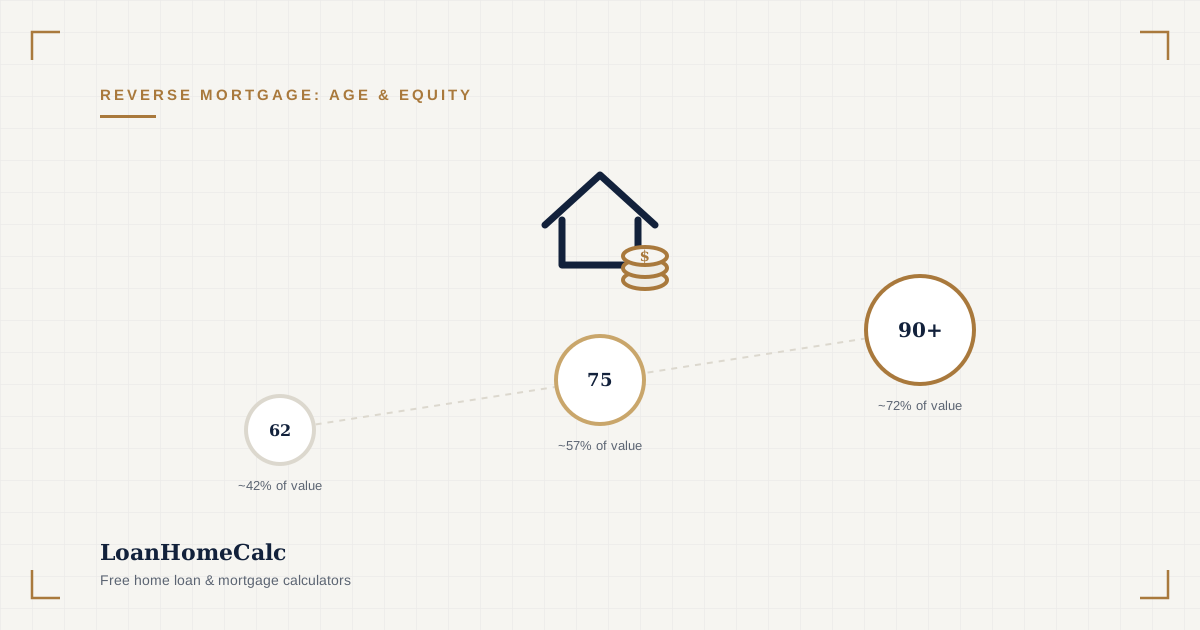
To give you a feel for how age affects your principal limit factor (the percentage of home value you can access), here's a simplified illustration:
| Age | Approx. Principal Limit Factor |
|---|---|
| 62 | ~40-45% |
| 70 | ~50-55% |
| 80 | ~60-65% |
| 90+ | ~70-75% |
So on a $400,000 home, a 62-year-old borrower might access roughly $160,000-$180,000 before closing costs and any existing mortgage payoff, while an 80-year-old on the same home value might access $240,000-$260,000. This is exactly the kind of relationship our own Reverse Mortgage Calculator is built to illustrate, adjust the age slider and watch how the available amount shifts.
What Reduces Your Available Amount
Three things typically come out of your principal limit before you see any cash:
1. Existing Mortgage Payoff
If you still owe money on your current mortgage, that balance must be paid off at closing, usually directly from your reverse mortgage proceeds, before you receive anything.
2. Closing Costs
These include origination fees, an upfront mortgage insurance premium, appraisal fees, and standard closing costs, typically totaling a few percent of your home's value.
3. Mortgage Insurance Premium (MIP)
HECM loans carry an upfront MIP and an ongoing annual MIP, which protects both you and the lender but adds to the loan balance over time.
Understanding How the Balance Grows
Because there's no required monthly payment, interest and MIP accrue and get added to your loan balance every month rather than being billed to you, a process called negative amortization. This means your balance grows larger over time, the opposite of a traditional mortgage. It's a completely normal and expected part of how reverse mortgages work, but it's worth understanding before you borrow, especially if you're considering leaving the home to heirs.
Our Reverse Mortgage Payment Calculator projects this balance growth year by year, so you can see roughly what your loan balance might look like 10 or 20 years down the road based on your starting amount and rate.
Who Qualifies for a Reverse Mortgage?
Beyond the age 62 minimum, a few other requirements apply:
- The home must be your primary residence
- You must have substantial equity, generally at least 50%, though this varies by age and rate
- You must be able to keep up with property taxes, homeowners insurance, and basic home maintenance
- You're required to complete counseling with a HUD-approved counselor before proceeding
That last requirement isn't optional paperwork, it's a genuine consumer protection built into the HECM program, designed to make sure you understand exactly how the loan works before signing anything.
Alternatives Worth Comparing
A reverse mortgage isn't the only way to access home equity, and depending on your situation, it may not be the most cost-effective one. A couple of alternatives worth running the numbers on first:
HELOC (Home Equity Line of Credit)
If you don't need a large lump sum immediately and are comfortable with a variable rate and eventual repayment, a HELOC often carries lower upfront costs than a reverse mortgage. The tradeoff is that a HELOC does require monthly payments, unlike a reverse mortgage. Our HELOC Calculator shows your draw-period and repayment-period numbers side by side.
Cash-Out Refinance
If you're still working, have solid income, and your current mortgage rate isn't drastically below today's rates, a cash-out refinance replaces your mortgage entirely and gives you a lump sum, with the more familiar structure of a single fixed monthly payment. It requires ongoing payments, which a reverse mortgage doesn't, but often carries lower total costs if you plan to move or sell within a decade. Try our Cash-Out Refinance Calculator to compare.
The right choice really comes down to whether you want to avoid a monthly payment (reverse mortgage's main appeal) or whether you're comfortable with one in exchange for potentially lower total borrowing costs (HELOC or cash-out refinance).
Frequently Asked Questions
Do I still own my home with a reverse mortgage?
Yes. You retain full ownership and title to your home as long as you meet the loan's ongoing requirements, including property taxes, insurance, and basic maintenance.
Can I lose my home with a reverse mortgage?
The loan can become due if you fail to pay property taxes or insurance, or if you move out of the home for more than 12 consecutive months, including for extended medical care. Staying current on these obligations is essential to keeping the loan in good standing.
What happens to a reverse mortgage when I die?
The loan balance becomes due. Heirs typically have options: pay off the balance to keep the home, sell the home and use the proceeds to repay the loan, or in some cases sign the home over to the lender. With a HECM specifically, heirs will never owe more than the home is worth at that time, thanks to FHA's non-recourse protection.
Is a free reverse mortgage calculator accurate enough to make a decision?
It's accurate enough to understand the general relationship between your age, home value, and available funds, but the exact number requires a HUD-approved lender's calculation using official PLF tables, along with your required counseling session.
Run Your Own Estimate
Start with our Reverse Mortgage Calculator to see an estimated principal limit based on your age and home value, then use the Reverse Mortgage Payment Calculator to see how your balance might grow over time. If you're still deciding between a reverse mortgage and other ways to access equity, the HELOC Calculator and Cash-Out Refinance Calculator are worth comparing side by side before you talk to a lender.