July 26, 2026
HELOC vs. Home Equity Loan vs. Cash-Out Refinance: Which Should You Choose?
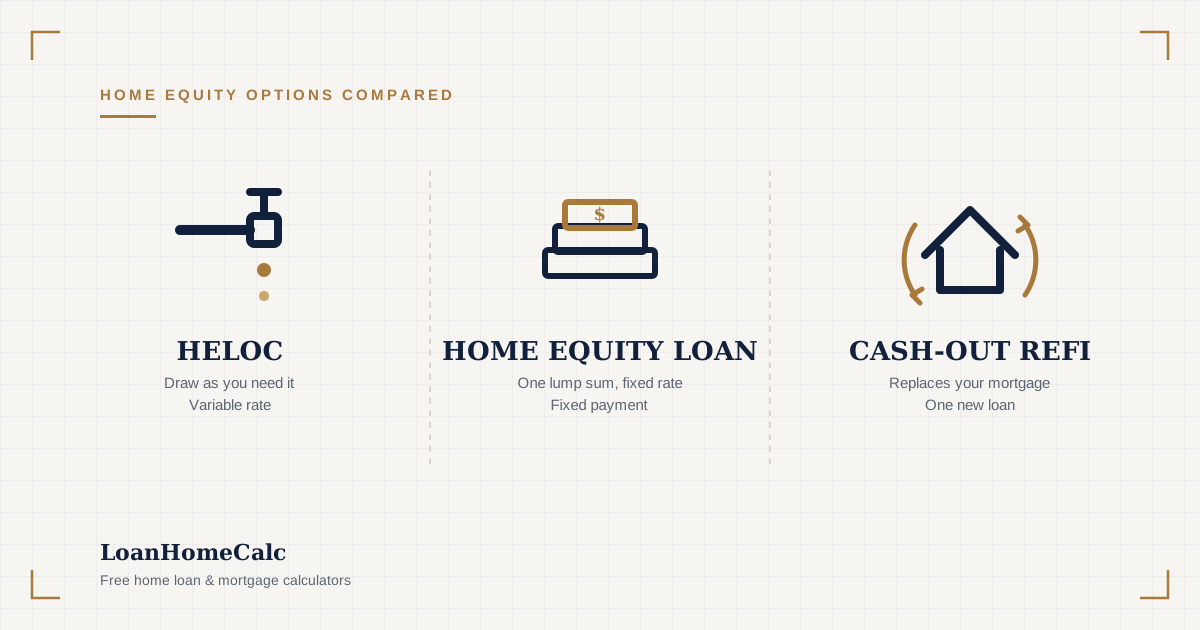
Your home equity is one of the largest financial resources most homeowners have, but there are three very different ways to actually access it: a home equity line of credit (HELOC), a home equity loan, and a cash-out refinance. Each one uses your equity to get you cash, and each one calculates payments completely differently.
If you've searched for a home equity loan calculator, a HELOC calculator, or cash out refinance options and come away more confused than when you started, this guide breaks down exactly how the three compare, so you can pick the one that actually fits your situation.
Step One: Know Your Home Value
Before comparing any of these options, you need a reasonably accurate sense of your current home value. Most lenders will order a formal appraisal, but a home value estimator, whether from your local county assessor, a real estate listing site, or a recent comparable sale nearby, gives you a useful starting number to work with before you apply anywhere.
Your available equity is simply your home's current value minus what you still owe on your mortgage. Most lenders will only let you borrow up to 80-85% of your home's value across all loans combined, known as your combined loan-to-value ratio (CLTV).
Option 1: HELOC (Home Equity Line of Credit)
A HELOC works like a credit card secured by your home. You're approved for a credit limit, and you draw money as you need it rather than receiving it all at once.
- Rate type: Variable, tied to the prime rate
- How you receive funds: Draw as needed, up to your limit
- Payment structure: Interest-only during the draw period (often 10 years), then principal + interest during repayment (often 20 years)
- Best for: Ongoing or uncertain expenses, like a multi-phase renovation or an emergency fund you hope not to fully use
The flexibility is the main appeal: you only pay interest on what you actually draw, not your full approved limit. The tradeoff is a variable rate, meaning your payment can rise if market rates increase.
Option 2: Home Equity Loan
A home equity loan gives you a single lump sum upfront, with a fixed interest rate and a fixed monthly payment from day one, similar in structure to your original mortgage.
- Rate type: Fixed
- How you receive funds: One lump sum at closing
- Payment structure: Fixed principal + interest payment for the full term
- Best for: A single, known expense, like paying off a specific debt or funding a one-time purchase
Because the rate is fixed, your payment never changes, which makes budgeting simpler. You lose the flexibility of drawing funds gradually, since you receive, and start paying interest on, the entire amount immediately.
Option 3: Cash-Out Refinance
A cash-out refinance replaces your entire existing mortgage with a new, larger one, and you receive the difference in cash at closing. Unlike the other two options, this isn't a second loan sitting alongside your mortgage, it replaces it entirely.
- Rate type: Fixed or adjustable, on the entire new loan balance
- How you receive funds: One lump sum at closing
- Payment structure: A single new monthly mortgage payment covering your original balance plus the cash withdrawn
- Best for: Homeowners who can also improve their interest rate, or who prefer a single loan rather than two
Cash-out refinance rates are typically a bit higher than a standard rate-and-term refinance, since the loan balance and risk to the lender are larger. If your current mortgage rate is already low, refinancing the entire balance to access a smaller amount of cash may not be the most cost-effective route, worth comparing carefully against a HELOC or home equity loan instead.
Side-by-Side Comparison
| Feature | HELOC | Home Equity Loan | Cash-Out Refinance |
|---|---|---|---|
| Rate type | Variable | Fixed | Fixed or variable |
| Funds received | Draw as needed | Lump sum | Lump sum |
| Number of loans after | Two (original + HELOC) | Two (original + new loan) | One (replaces original) |
| Best for | Ongoing expenses | One-time known expense | Cash needs + rate improvement |
How Refinance Mortgage Rates Affect Your Decision
Current refinance mortgage rates play a bigger role in this decision than many homeowners expect. If today's rates are meaningfully higher than your existing mortgage rate, a cash-out refinance means giving up your current low rate on your entire balance, not just the new cash you're withdrawing. In that scenario, a HELOC or home equity loan, which leaves your original low-rate mortgage untouched, is often the more cost-effective path.
On the other hand, if current rates are similar to or lower than your existing rate, a cash-out refinance can let you access equity while also improving your rate on the full balance, a genuine two-for-one benefit.
Frequently Asked Questions
Which option has the lowest interest rate?
Home equity loans and cash-out refinances, both fixed-rate options, are often priced lower than HELOCs, though this varies by lender and market conditions. HELOCs typically start with a lower introductory rate but carry more long-term rate uncertainty.
Can I have a HELOC and a home equity loan at the same time?
In some cases yes, as long as your combined loan-to-value ratio across all loans stays within the lender's limit, typically 80-85%. Most homeowners choose one or the other rather than combining them.
Does a cash-out refinance reset my loan term?
Yes. A cash-out refinance is an entirely new mortgage, so if you had 20 years left on your original loan and refinance into a new 30-year term, you're extending your overall payoff timeline, worth weighing against the cash benefit.
Run Your Own Numbers
The right choice depends heavily on your specific equity amount, your current mortgage rate, and how you plan to use the funds. Try our HELOC Calculator to see your draw-period and repayment-period payments, or our Cash-Out Refinance Calculator to see your maximum cash-out amount and new monthly payment side by side.